The 1917 Spyglass
“a leather-wrapped eye that still searches for a coast”
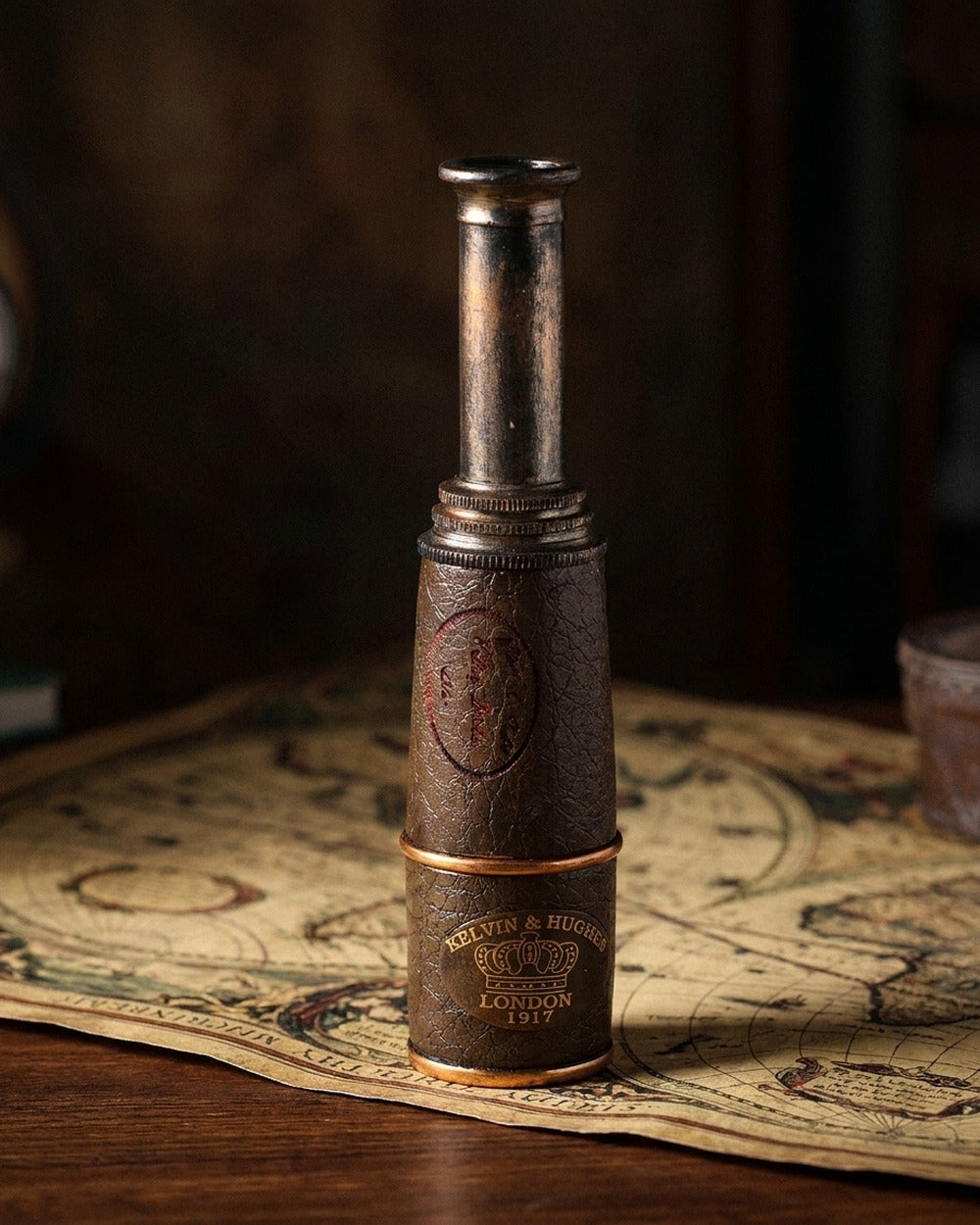
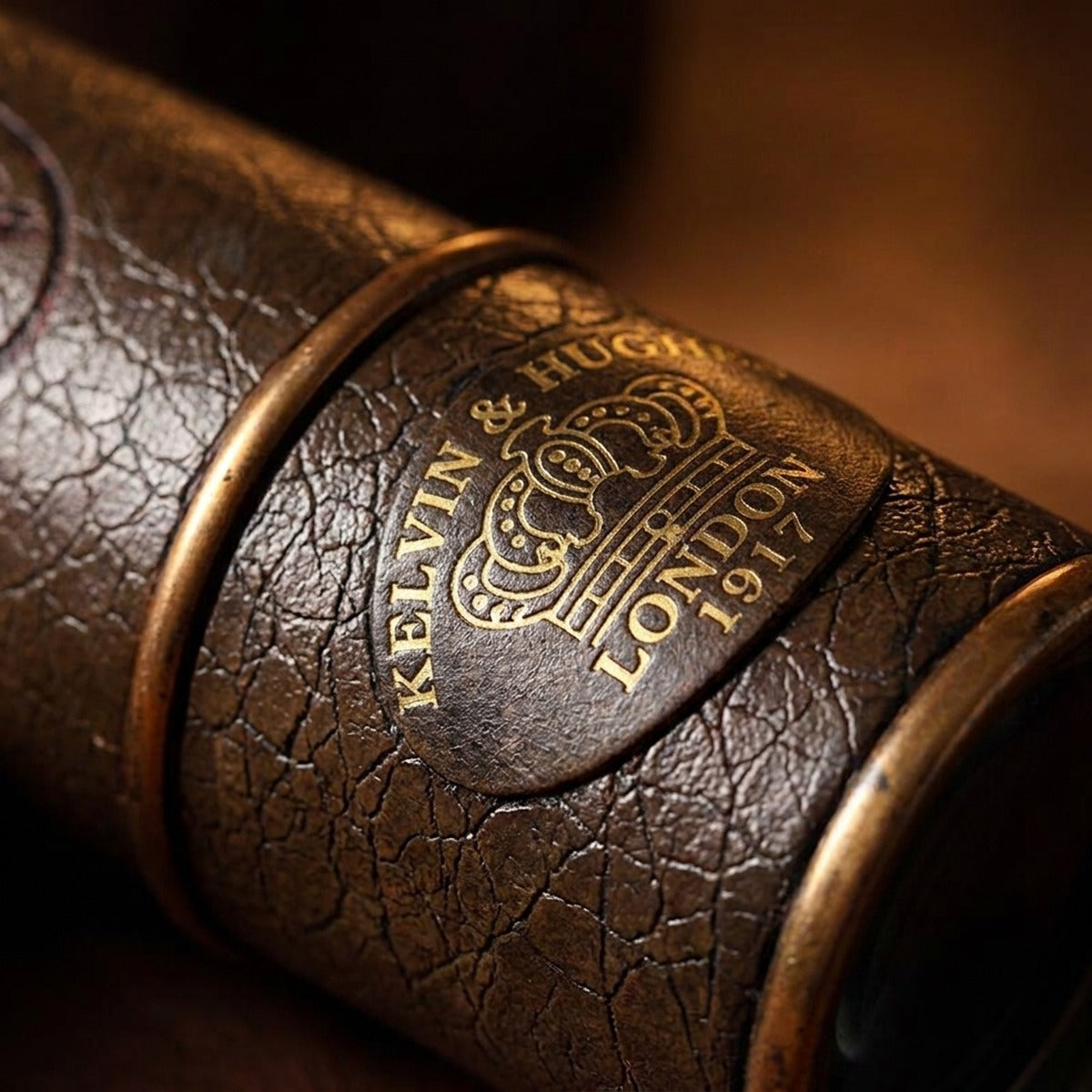
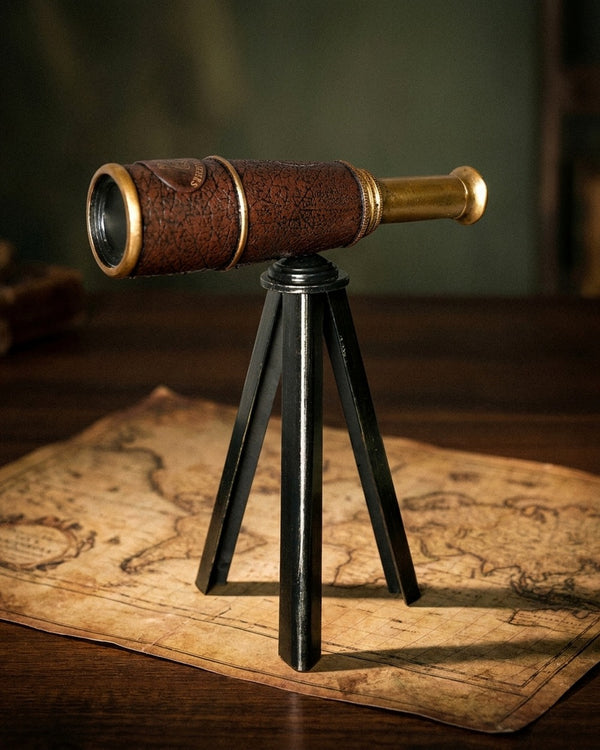
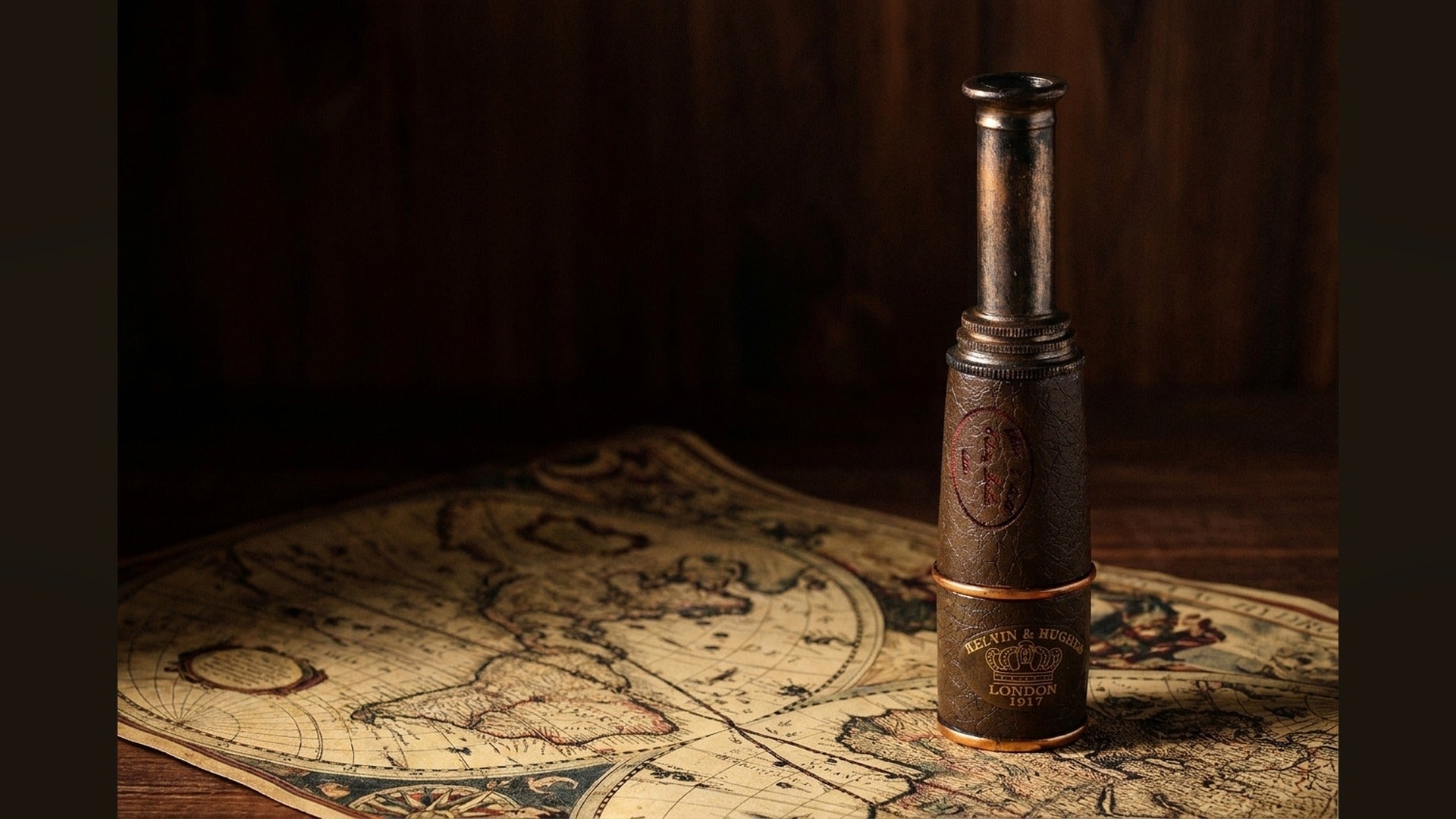
A spyglass is a promise to look further than you can reach. This one wears its leather like an old coat — cracked, warmed, the brass at its mouth gone soft and dark. Pressed into the wrap is a name from the great age of sea charts: Kelvin & Hughes, London, 1917. We did not invent that line, and we will not pretend we made the original. This is a reproduction, built in the spirit of the instruments that once stood at a ship’s rail and waited for a coast to appear.
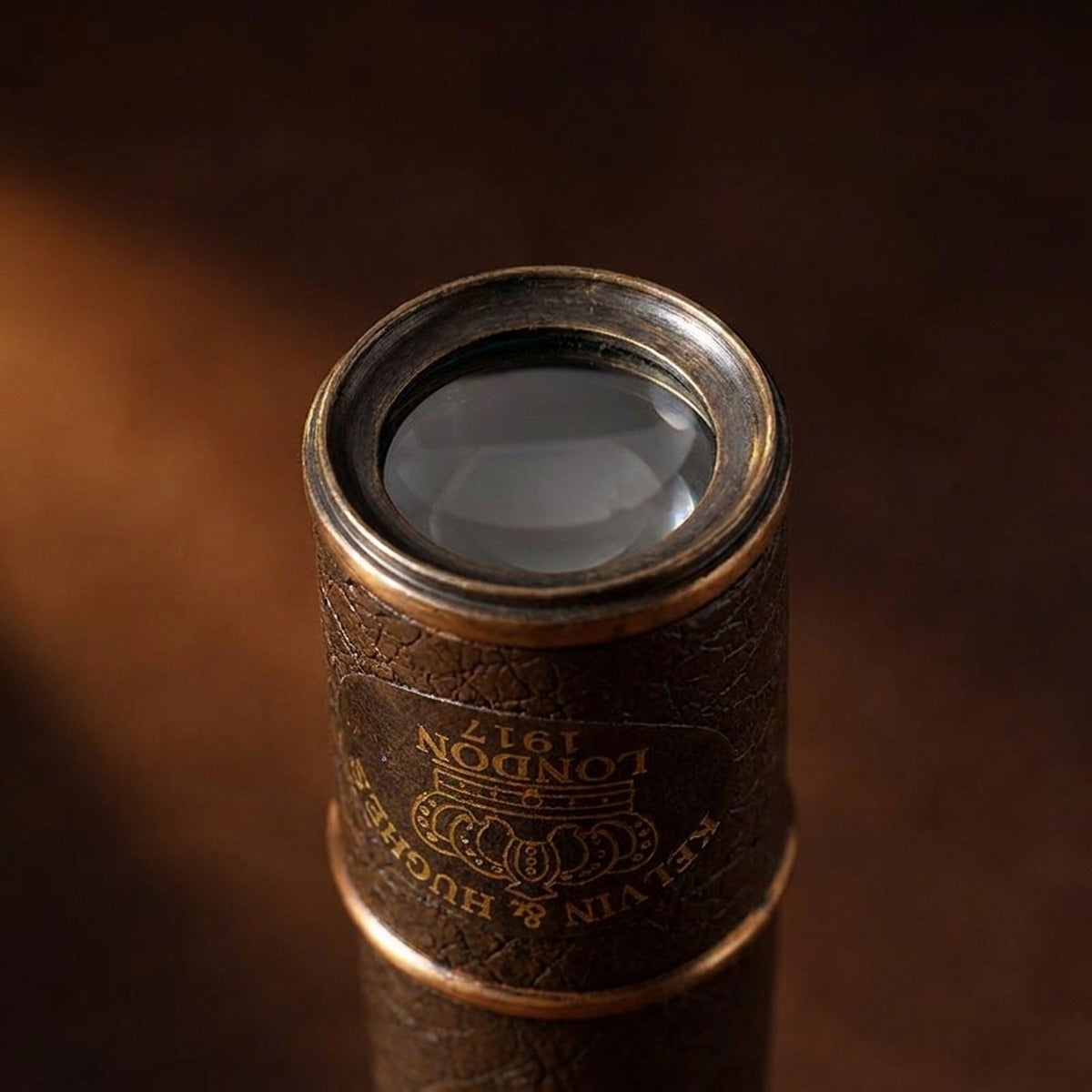
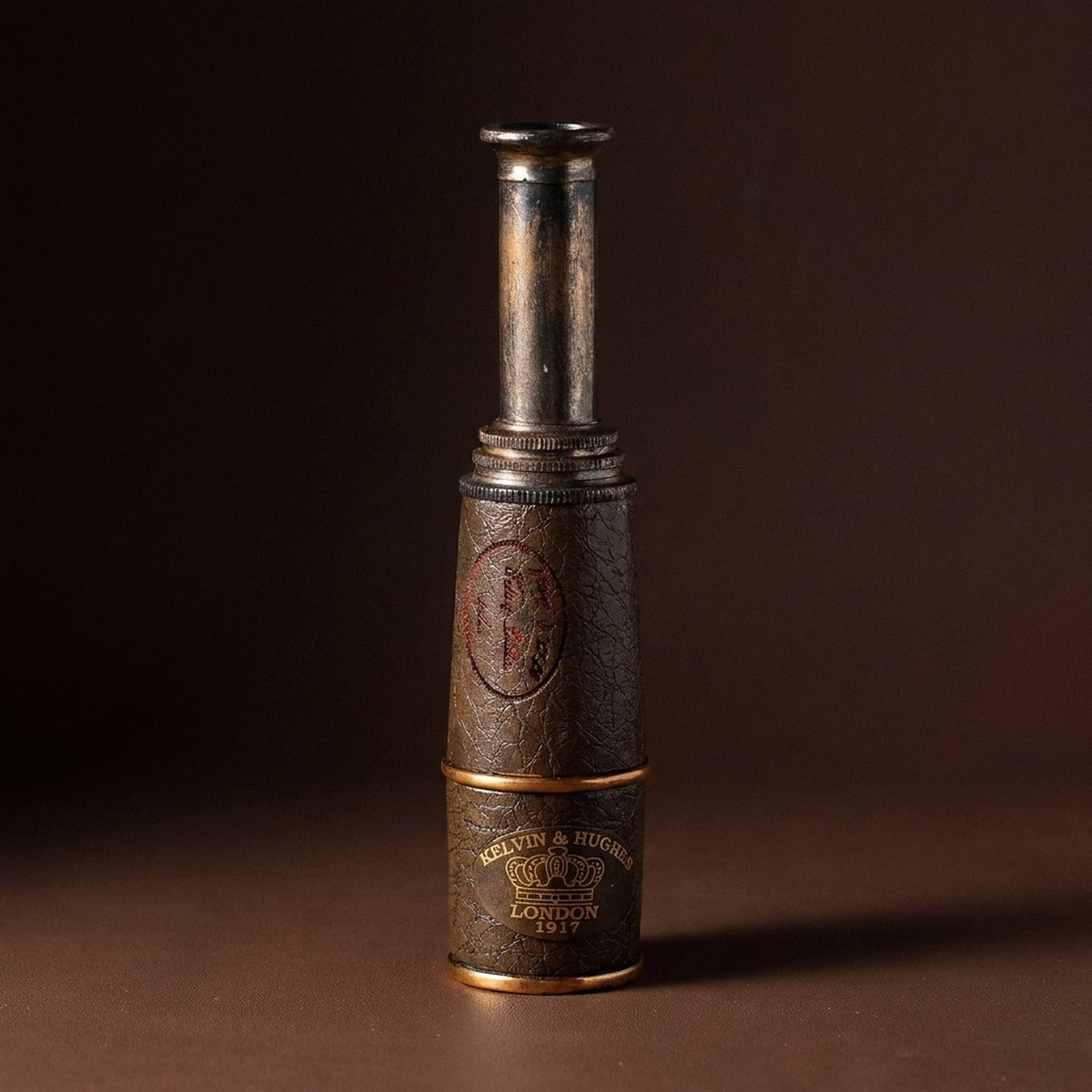
It is a standing monocular spyglass: a resin body wrapped in aged faux leather, with a brass-look metal mouth and draw-tube. Set it on a shelf, a windowsill, or a stack of old books — a gesture toward the far-off. It is kept for the gesture, not the magnification.
Kelvin & Hughes were real makers of British maritime and survey instruments; their scopes travelled with merchant ships and sea charts through the years between the wars. The marking pressed into the leather is a tribute to that age of measuring the horizon with a single eye.
The cracked leather, the darkened brass, the worn collar — these are an intentional aged finish, not damage. We did not polish out its life. But it is newly made: an honest reproduction, not a hundred-year-old original.
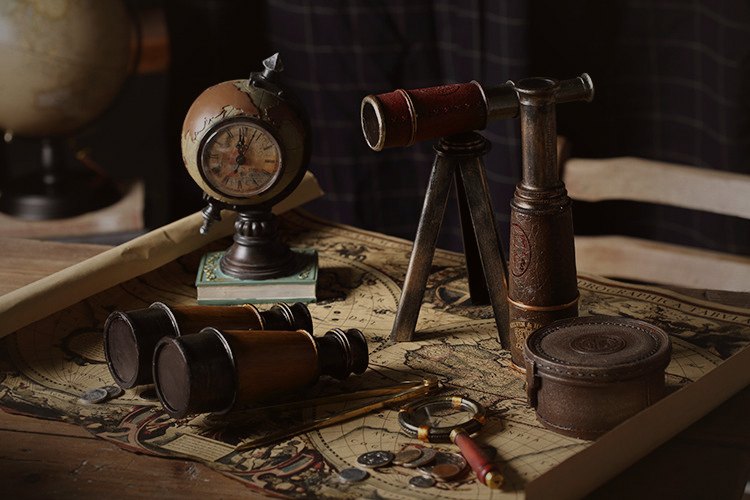
Sea-chart rooms, explorers, a Verne-shaped longing for the far-off — that is where it belongs. Its natural company: an old map, a globe, an afternoon window.